Introduction: Why Street and Traffic Signs Are More Than Just Metal on a Pole
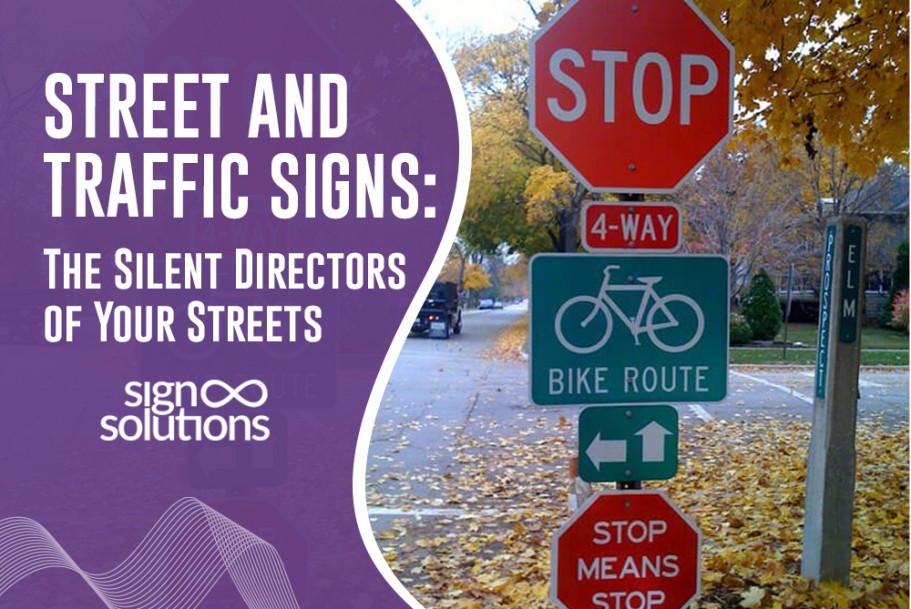
Traffic signs are meant to make our lives easier and simpler on the streets and at crossroads. Every day, millions of people commute to and return from their destinations without a single spoken word.
No instruction is given, no officer stands there to control, and no loudspeaker guides the drivers to slow down their vehicles or take a safe turn. When there is nothing to guide or instruct the drivers, there are street and traffic signs that silently guide every movement and ensure safe passages to the drivers’ destinations.
The traffic signs are so silent that we rarely notice them and often pass them without second thoughts. Even while they are silent, they are still in control. The importance of traffic signs becomes comprehensible the very moment one misses them. One missed signal and suddenly calm changes to chaos, controlled becomes confused. No one is aware of what happened; suddenly, drivers hesitate, and pedestrians feel unsafe and insecure. Traffic halts, vehicles jam obstructing eachother, and accidents become prominent.
Why did this happen? One missed signal is all that you need to create uncontrolled commotion at the roundabouts or traffic circles. Traffic Signs, a powerful and system-driven visual communicator for superior traffic management, or should we call it a chaos controller? Road signs have a simple yet critical function to perform. They not only influence human behavior but also instruct, warn, and guide traffic flow without unnecessary confrontation or enforcement.
To enable and ensure smooth urban navigation, authorities should strategically place street signs with a consistent design.
Remember: Street signs are not background objects. They are the silent directors that keep our roads safe and functioning smoothly.
Understanding the Three Core Roles of Traffic Signs
As cited in one of the articles published in Cayman Compass, almost 8,000 new cars were added, contributing to Cayman’s traffic jams in 2022. The Department of Vehicle and Drivers’ Licensing recorded an all-time high of 46,199 new vehicles passing inspection during 2022. This figure was 22% higher than the previous year. Post-COVID, Cayman’s economy has bounced back. This has resulted in a substantial increase in the population and the purchase of new vehicles, posing a significant challenge for the government’s policymakers in the Cayman Islands.
Managing such massive traffic calls for organized street management. To manage our streets well, let’s look at the three essential types of traffic signs.
Regulatory Signs
As the name suggests, these sign types regulate our actions. They tell us what to do and what not to do. You might have seen various signs like stop signs, speed limit signs, no-entry signs, and signs highlighting no-parking zones. All these fall under the Regulatory Sign category.
If you compare regulatory vs warning vs guide signs, regulatory signs surface as the authoritative signs. Hence, the main purpose of regulatory signs is to set up the legal framework for our road networks. By virtue of their authority, they enforce order and create a sense of accountability among the vehicle owners. In the absence of regulatory signs, governments find it impossible to deploy standardized rules, resulting in complete chaos.
Warning Signs
Warning signs are of grave importance as they prepare drivers and pedestrians for possible perils. Sharp curves, school zones, pedestrian crossings, and slippery roads are called warning signs.
These road safety signs don’t expect us to act, yet they are necessary for safety. They warn us about potential dangers, giving us an opportunity to remain safe.
Guide and Informational Signs
When navigation poses a challenge, these Guide and Informational Signs help us. They offer proper direction, distance from a place, the names of streets, and accurate route numbers. They ease the management of complex road networks.
These three core traffic sign categories form the basis of a coordinated traffic and road management system. Each sign type has a distinct role, yet they all promote efficient movement and safe commuting.
How Signs Create Predictability and Reduce Confusion on Roads
Think of a situation where you look around and find that every stop sign looks different. Each one has a different color, a different shape, a different font, and a different design. Wouldn’t such a condition be mentally exhausting for drivers? That is the real reason why uniformity matters.
Installing Uniform Traffic Signs across the road network reduces cognitive load on drivers and pedestrians. A red octagon will instantly ask the drivers to stop their vehicles, whereas a triangular warning sign indicates a possible hazard. This categorical uniformity is consistent across the globe, helping drivers make the right decision without delays. Thanks to the element of consistency present in design, color, and placement across signage in all regions and cities. Drivers can now feel safe while making choices.
Sign visibility is also paramount. Improper or poor placement of signs may lead to unknown risks. Moreover, if a sign is hidden by trees or mounted too low, it becomes ineffective. It is as good as it doesn’t exist. That is the reason why Trusted Sign Makers in Cayman follow strict street sign standards. Additionally, these standards not only regulate height, reflectivity, size, and positioning but are also in the interest of general public safety and well-being.
Leave no room for chaos and confusion by creating predictable Street and Traffic Signs. Sign predictability keeps the roads and traffic under control. Contrary, inconsistent, and unclear signage becomes the root cause for hesitation and increased risky maneuvers.
Street Signs and Traffic Flow: Reducing Congestion Naturally
How would it feel to be stuck in a traffic jam with no clear instructions to go? Most traffic congestion happens because of poor directions. Where street signs are installed properly, even heavy vehicle volume doesn’t result in congestion, and people enjoy their drives to the max.
It is important to plan the signage placement. Streets and roundabouts with well-planned signage result in smooth traffic flow management. Each lane has a predefined speed limit to regulate the pace of vehicles. Additionally, lane control signs become crucial in preventing sudden merges. Where signs are installed properly, and drivers follow the traffic rules, accidents don’t occur easily, saving people’s lives and public property.
The street sign's impact on congestion is subtle and powerful. When a turn-only sign is placed clearly, last-second lane changes don’t happen, saving a great deal of embarrassment. A red stop sign is a powerful traffic calming sign, bringing heavily rushing traffic to a halt, especially in residential zones without heavy infrastructure. The red color instructs the driver’s brain to stop the vehicle without communicating a single word.
Urban areas with a heavy population may have multiple intersections. Urban mobility signage is essential for effective and smoother transitions between these intersections. Well-planned urban signs reduce bottlenecks and encourage steady and systematic movement of traffic even during peak hours. Each vehicle here moves independently, creating a coordinated flow.
No screeching brakes, no honking horns, peaceful commute guaranteed.
Safety First: How Signs Protect Lives on Foot and Wheel
Are traffic signs a collection of a few symbols, or do they have objectives? Safety and guidance are the core objectives you see behind every street sign. Their main purpose is to save drivers and pedestrians from unwanted traffic congestion and chaotic situations.
Traffic sign safety is meant to prevent risk from turning danger into injury.
Pedestrian crossing signs play a crucial role in alerting drivers about foot traffic and asking them to slow down. Moreover, bicycle lane markings signify a dedicated space for riders. These signs actually ask the drivers to respect those on foot and on their cycles. Such well-placed signs provide pedestrian and cyclist protection, especially in high-density zones.
Steep descent signs and construction alert signs are an integral part of critical road hazard signs. They are there to warn the drivers of possible dangers and respond safely while they still have time.
Smooth traffic management is a major challenge for any traffic control department or highway authority. Hence, they need accident prevention signage in place, especially in the most complex urban intersections. Where every second counts, there is no room for confusion. Only crisp and clear directions can help reduce misjudged turns and sudden braking.
There are instances when drivers don’t abide by the traffic rules or don’t follow signs, creating a major possibility for collisions. Signs, we understand, cannot physically stop accidents, but can significantly reduce the likelihood of them happening in the first place.
Why take chances when the silent directors of your street can make you feel and stay safe?
Technology & Innovation: The Modern Evolution of Street Signage
Street signs are no longer those simple-looking painted metal plates. With technology, street signs have evolved far beyond making them more effective and efficient.
Modern-day reflective traffic signs are created using high-intensity materials. These materials remain visible both at night and during heavy rains. The greatest benefit of using high-intensity material in creating street signs is that they can’t be missed or ignored in any season, which significantly improves reaction and response time even in low-light conditions.
Dynamic message signs help drivers adapt to the traffic conditions. Technology-driven digital displays communicate real-time updates, enabling drivers to get updates on traffic delays, weather warnings, and emergency alerts.
To save on electricity, modern street signage comes with built-in solar-powered units and LED illuminated borders. These dynamic messaging signs are connected with the live network of the Intelligent Transportation System (ITS). This ITS network uses A.I., IoT sensors, CCTV cameras, and data analytics to optimize traffic flow, efficiently manage transportation infrastructure, and deliver enhanced safety and security to the citizens in real time.
Thanks to A.I. for providing us with an advanced environment to manage traffic. Smart road signs, an integral part of this advanced environment, are capable of adjusting speed limits, effectively taking care of congestion levels and road conditions.
The technology powering our Modern Evolution of Street Signage has been instrumental in transforming yesteryear's static instruction-based metal plate signage to highly advanced responsive communication devices, guiding us through safety.
What Happens When Signs Are Ignored, Missing, or Misplaced
Not only worn-out, absent, or improperly placed signs, but reckless drivers for most of the time are responsible for gruesome and dangerous accidents.
Missing street signs: It increases wrong turns, speeding in school zones, and unsafe intersections. When drivers are forced to guess, mistakes occur easily.
Traffic sign misuse: Vandalism or unauthorized modifications compromise clarity. Even a tilted sign can delay recognition.
Road signage vandalism: The act of damaging public property does more harm than good. Such acts increase public liability and incur great costs in the form of taxes.
Low sign compliance issues: Ignoring instructions on the signs proves too risky for any driver. When drivers consistently ignore posted limits, enforcement becomes reactive rather than preventive.
Effective signage must be maintained, respected, and monitored to ensure its continued effectiveness.
Street Signs as Community Assets: Enhancing Urban Experience
Street signs don’t exist only to direct people to their destinations or regulate traffic, but are important assets for the whole community.
Urban street signage, in its true sense, enhances visual coherence. Placing street signs with clear typography, durable materials, and clean design fosters safe driving practices.
In commercial areas, community wayfinding signs offer clarity to visitors and enhance their confidence. Tourists are important as they positively influence the economy of any state. Placing signs with clear and easy-to-understand symbols and instructions not only attracts them but also ensures they find their tourist destinations more quickly. Street signs are acommunity asset because they help shoppers to easily locate their favorite commercial outlets, coffee shops, or restaurants, along with the right direction to safe parking.
Strategically aligned and installed city traffic signs are a blessing for both residents and visitors, delivering a memorable street navigation experience.
Clear and well-placed signage makes the city look more organized, attractive, and cared for.
Partner With Experts to Keep Your Streets Moving
Well-designed signage is not accidental. It requires planning, compliance expertise, engineering insight, and precision manufacturing.
Professional traffic signage services ensure that every sign meets regulatory standards and supports real-world traffic patterns.
Experienced street sign experts offer professional consultation, design, fabrication, installation, and ongoing maintenance.
Whether you are a municipality, property developer, or infrastructure planner, partnering with a reliable custom street signage company ensures your streets remain safe, organized, and efficient.
Because in the end, the streets may be busy, but the guidance should never be confusing.