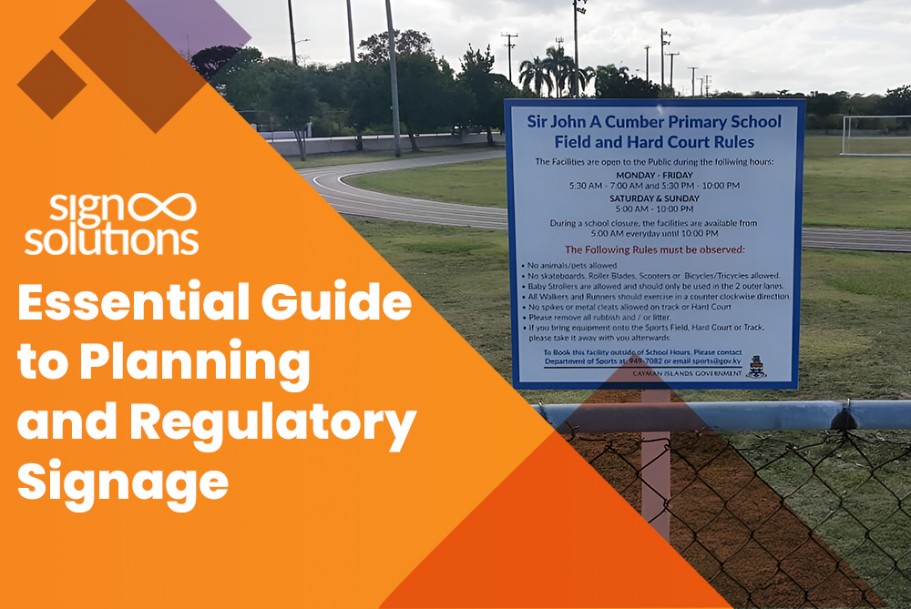
Why Planning & Regulatory Signage Matters
Are business signs limited to displaying the business names and their logos? No, business signs actually move beyond the traditions and add chapters of success to brand visibility by communicating trust, safety, and legitimacy.
Planning and regulatory signage is unique and has a critical role to play. This sign lets people know that your business operates within legal boundaries while delivering a smooth customer experience. In simple words, a planning and regulatory sign is your business armour protecting it from all possible litigations.
Contrary to other sign types, the planning and regulatory sign also indicates that your business complies with the laws and regulations enforced by government authorities. It is quite clear that non-compliance with these regulations will sooner or later lead to fines, forced removals, delayed openings, even reputational damage, and loss of market credibility.
What happens if you comply fully with the laws? You enjoy positive benefits because well-executed commercial sign planning helps businesses stay aligned with signage regulations. Proper signage compliance not only improves your business accessibility and creates clear navigation for customers and staff but also sets elevated expectations and reduces confusion.
Planning vs Regulatory Signage
Are planning and regulatory signs the same, or are they different because of the purposes they serve? You will be surprised to know that many business professionals use these terms interchangeably.
Understanding the difference between planning signage and regulatory signage is the first step toward compliance.
What flashes in your mind when you hear the word regulation? You would get an impression about something that is legally binding. Regulatory signage works on the same principle. The existing legal structure, system, or authority in your city or state wants you to implement these signs. Safety warnings, fire exits, accessibility signs, and parking notices fall under the category of regulatory signage. Their main purpose is to protect people and enforce rules.
If your first thought is about planning something, the succeeding thought will be about approval. This is the actual concept that planning signage talks about. When you decide (plan) to design a sign for your business, you must create it keeping the predefined approvals and permissions in view. Violating either can land you in hot water. Looking from a different perspective, the approvals and permissions by government bodies are your guidelines, saving your brand from any legal action.
Planning signage guides about
How should you design your signs?
What are the acceptable sizes?
How should the signs be illuminated?
How should your signs be placed?
What levels are safe for people?
Both these types of business signage are governed by commercial signage rules.
Here is a simple example to understand the planning signage.
Your storefront sign looks great if you have a proper planning approval.
Without appropriate written authorization, it may still be considered illegal,
and that is what you don’t want.
Key Regulatory Signage Requirements
Planning signage compliance is simple. However, business compliance for regulatory signage requires you to focus on several key aspects from the start. Let’s understand each key aspect in brief.
Zoning and land-use rules: This aspect determines the placement. It tells you where signs can be installed and how large they can be. The dimensions are specific. There are different sets of rules for residential, commercial, and mixed-use zones.
Safety and warning signs: This aspect is strict and non-negotiable. Regulatory sign requirements include hazard warnings, emergency exits, and fire safety notices. The primary purpose of safety signage compliance is to protect the occupants and reduce possible damage.
Accessibility signage: This aspect talks about equal access for all. As per the ADA signage rules or local equivalents guidelines, readable signs for restrooms, entrances, and accessible routes should be clearly marked. These are essential business safety signs that demonstrate responsibility and inclusivity.
It is essential to note that parking, fire lanes, and internal directional signs do fall under regulated categories. They are worth only if they meet the prescribed visibility and placement standards.
How Local Regulations Affect Signage
Expecting the signage laws to be the same in all the cities is practically impossible. Each city, county, or state has a different set of local signage regulations. It means that a sign approved in one area may be rejected or unacceptable in another location.
Zoning laws for signage define the acceptable heights, illumination types, and the allowed distance from roads. City sign codes may restrict colors, materials, or even wording. This can be challenging in the case of a few franchises or multi-location businesses that want visual consistency.
If you believe that getting approval from one specific city will serve all locations, then that’s a myth. For each site, you typically require its own commercial sign permit that’s reviewed under its local rules. It will be in your interest if you understand these differences as early as possible. It will save you from the hassles of redesigning and future delays.
Permits & Approval Process
Many business owners or their employees consider the sign permit process complex, but honestly, you can achieve success if you break it down into smaller tasks.
Because the governments are concerned about the general public's safety, they have strict guidelines in place. Authorities require you to submit detailed drawings, accurate dimensions, information on the material to be used, lighting specifications, and site plans of the location where the sign will be installed. Before discharging signage approval, authorities thoroughly review all the submitted documents to ensure that they are properly aligned with planning and safety codes. If the documentation and purpose are clear and in line with the standard guidelines, the approval arrives within weeks.
In many regions, planning permission and signage approvals require multiple departments to review your file and documents. These departments include zoning, fire safety, and accessibility. Based on your city or state, timelines may vary. It is essential to know that, unlike residential signage permits, commercial signage permits may extend over weeks or months, depending on the complexity of your signage details.
Because you cannot control the time taken by the local authorities, it is advisable to start the application early. It will help you avoid rushed installations and last-minute changes that not only increase the costs and efforts but also bring in unexpected challenges.
Planning Signage Early
To smooth the approval process, early planning is one of the smartest keys for businesses. To help you break down the whole process into smaller tasks, begin by preparing a clear signage planning checklist. Ensure that your checklist aligns with the design, placement, and compliance before initiating the installation.
An ideal sign placement strategy requires you to consider parameters like sightlines, traffic flow, and visibility from different angles. Double-checking your electrical connections, structural support, and lighting permissions is also a crucial part of business signage planning.
If you are starting out new or renovating an existing signage, do ensure that walls, facades, and power sources are prepared in advance as part of construction signage planning. With planning and proper strategy, you can reduce rework and avoid delays during final inspections.
Related Blog: Bright Ideas for Business Signage: Maximizing Impact with Lighting and Design
Working With Signage Experts
Modern signage providers do far more than fabricate signs. Experienced regulatory signage experts act as compliance partners throughout the process.
They offer signage compliance services, including design validation, code checks, permit coordination, and inspection support. A professional sign company understands both aesthetics and regulations. They help businesses avoid costly mistakes and improve brand visibility.
From concept to installation, commercial signage solutions offer compliance expertise, save your precious time, help protect budgets, and reduce risk.
Making Your Signage Future-Ready
Even while regulations change, future-ready signage is designed to let businesses grow and offer flexibility.
Switching to scalable signage systems allows you to update your signs without full replacements. It also makes rebranding or expansion easier. Your reliable signage consultant can help you stay informed about signage compliance updates, making businesses more proactive than reactive.
Investing in long-term signage solutions builds consistency, supports compliance, and strengthens brand trust over time. Planning ensures your signage continues to work for your business, not against it.